California residential lot split experts
Lot Splits to Maximize Your Property Value
Take advantage of California’s new Lot Split Law to unlock your property’s value. Creating another legal property can add $400,000-$900,000+ to your property value in just one year.
Our Services
Choose the lot-split service that fits your property.
Hear what our clients have to say
All testimonials“I have been super happy with the services I have received from Riechers Engineering.”

Mo R.Mountain View
“It has been an absolute pleasure working with the team at Riechers Engineering.”

Xiaodan L.Saratoga
Portraits are illustrative; testimonials are from Riechers clients.
$42MValue created for clients
110+SB9 lot split projects
$400KAvg. added property value
SB9 lot split projects
Check out our project map
Explore our lot split projects across California.
Why do a lot split
Create another legal property from land you already own
Riechers Engineering helps homeowners use California’s SB9 Lot Split Law to create new legal parcels, increase property options, and plan around family, wealth, rental income, and long-term development goals.
Benefits of a Lot Split
- Increase property value by approximately 25%.
- Create an additional real estate asset that can be developed, held, financed, or sold separately.
- Increase what you can build on your land: up to four homes when the property qualifies.
- Enhance estate planning and diversify real estate assets.
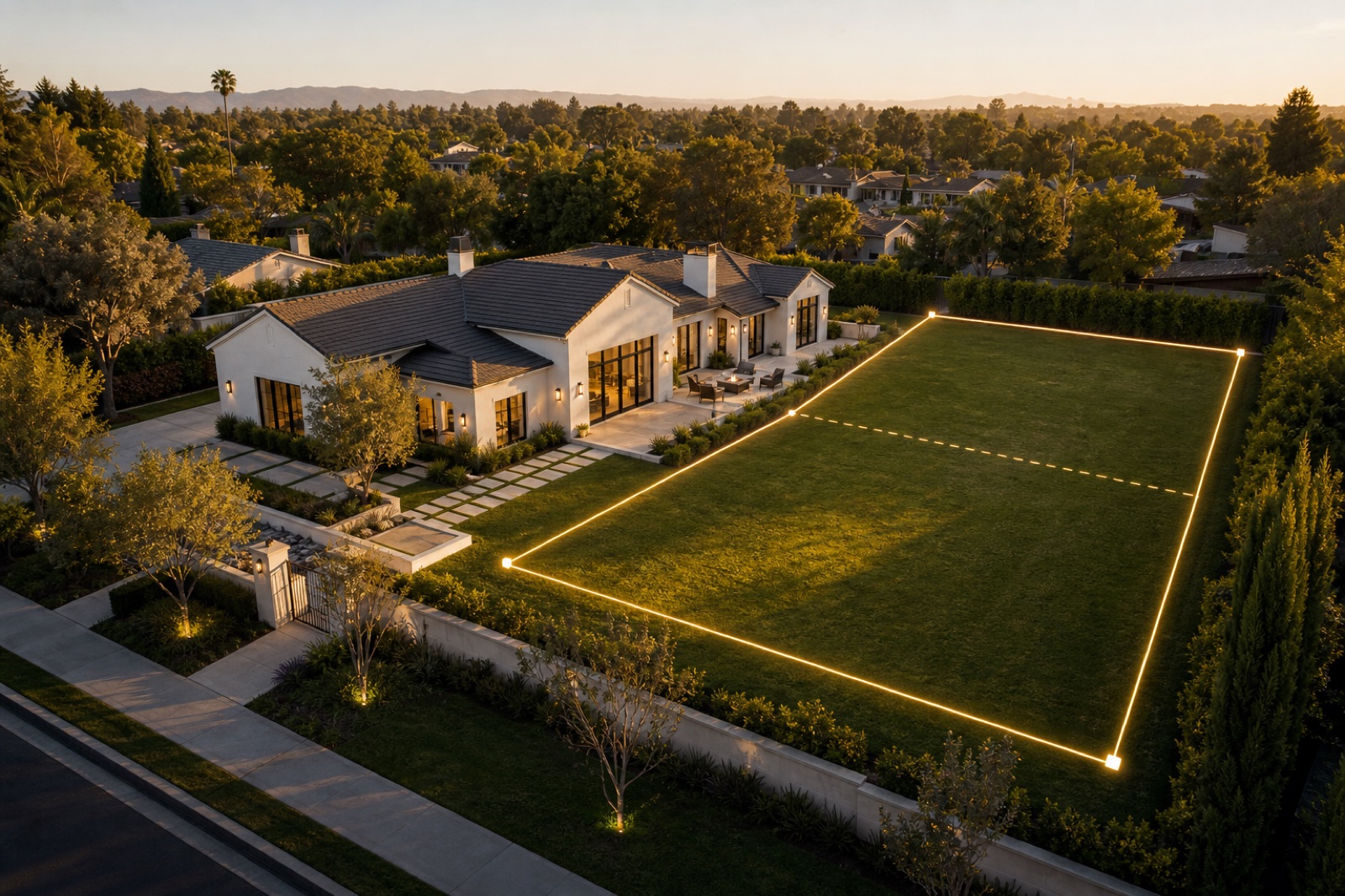
$400K-$900K+Potential added value when you create a separate legal parcel.
ADU vs. SB9 Lot Split
Know what each strategy creates.
| Factor | ADU | SB9 Lot Split |
|---|---|---|
| Cost and time | ||
| Illustrative project cost | Often ~$300K-$400K+ for design and construction | Often ~$50K-$80K for the lot-split path, before new-home construction |
| Illustrative timeline | Often 10-18 months | Often 9-15 months |
| What it creates | ||
| Creates new legal parcel | No | YES |
| Can sell separately | No | YES |
| Property value effect | Property-specific | Potentially 25-30% net property value increase |
| Construction and disruption | ||
| Construction required | Yes, to create the ADU | No for the lot split itself; future homes require construction |
| Utility construction required | Often | Property- and project-specific |
| Disruption to your home | YES | NO |
| Long-term potential | ||
| Return timing | Depends on rent, costs, and financing | Depends on recordation, costs, use, and sale strategy |
| Up to 4 primary units possible | NO | YES |
Illustrative planning guidance only. Results vary by property, jurisdiction, title, financing, site conditions, project scope, and market.
About Riechers Engineering
California’s experts in lot splits
Riechers brings 45+ years of residential development and civil engineering experience to a highly specialized SB9 process. The goal is to determine whether the property can actually work before homeowners spend money in the wrong order.
Engineering-led feasibility
Before you spend any money, our engineering team will review your lot size, access, utilities, feasibility and local standards. Avoid pitfalls upfront.
SB9 focus
Riechers specializes in CA lot split approvals, saving you time, hassle and money. Avoid contractor or generic engineering firms that don’t have the niche experience you need.
Low client lift
Riechers handles the technical process. Client responsibilities are minimal: sign documents, approve the parcel line, and provide notarizations.
How to lot split under SB9
Watch how the lot split process works before you start.
Watch our founder, Peter Riechers, explain how the SB9 lot split process works before you start.
Eligibility review
We check SB9 rules, local standards, site constraints, and ownership goals.
Parcel strategy
Identify a practical and valuable split configuration, access, utilities, and pinpoint jurisdiction standards.
Engineering & map
Move through survey, parcel-map work, agency comments, and revisions.
Approval & recordation
Resolve conditions, record the map, and turn the maps into a buildable, sellable real estate property.
Riechers explains the SB9 lot split process and what happens before a parcel map is recorded.
Value created for clients
Real SB9 project proof
Published Riechers’ client case studies help homeowners see how a lot split can create meaningful property value.
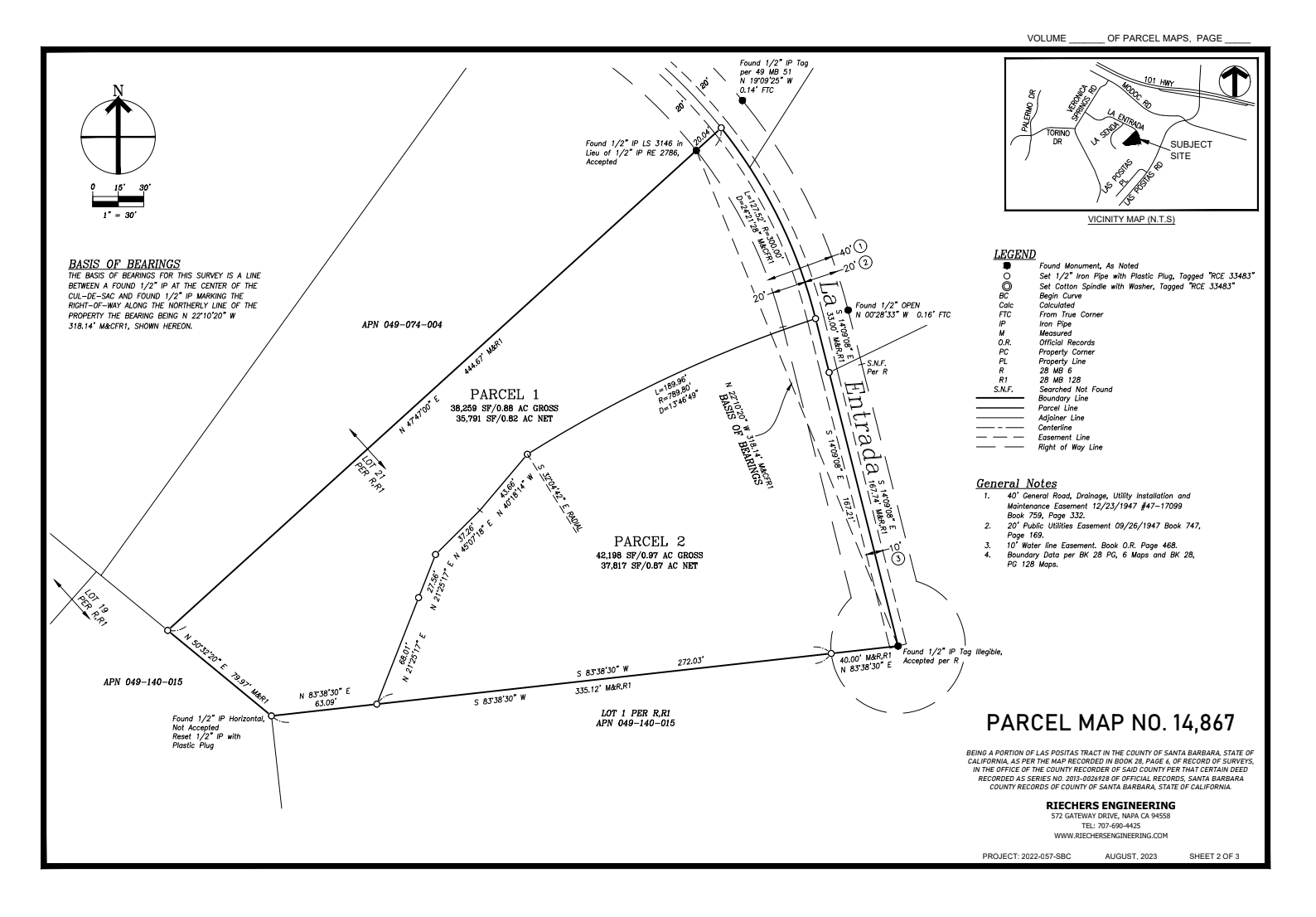
Santa Barbara County$650,000
Published lot split value increase from a Riechers case study.
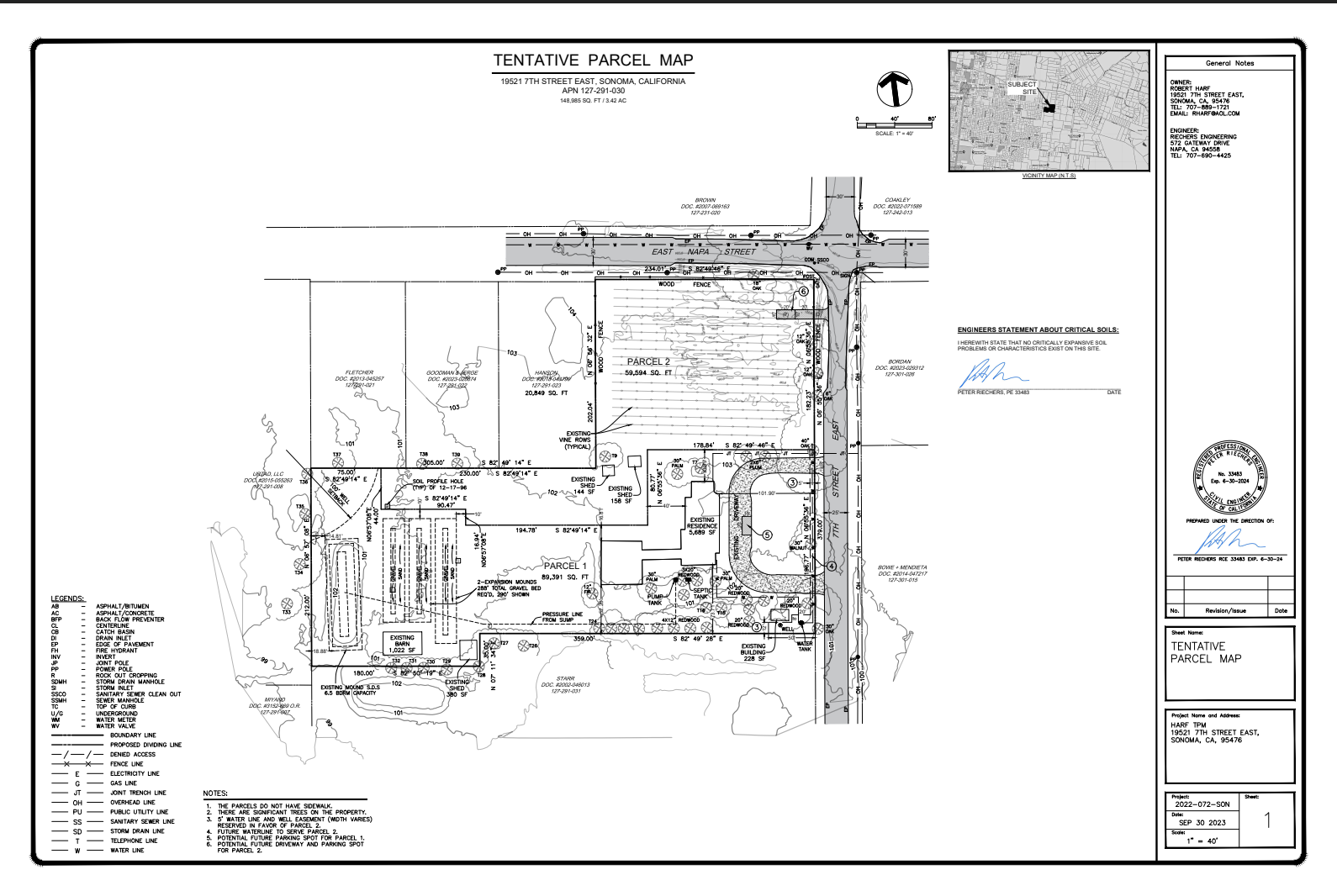
Sonoma$1,100,000
Published additional parcel value from a Riechers lot split project.
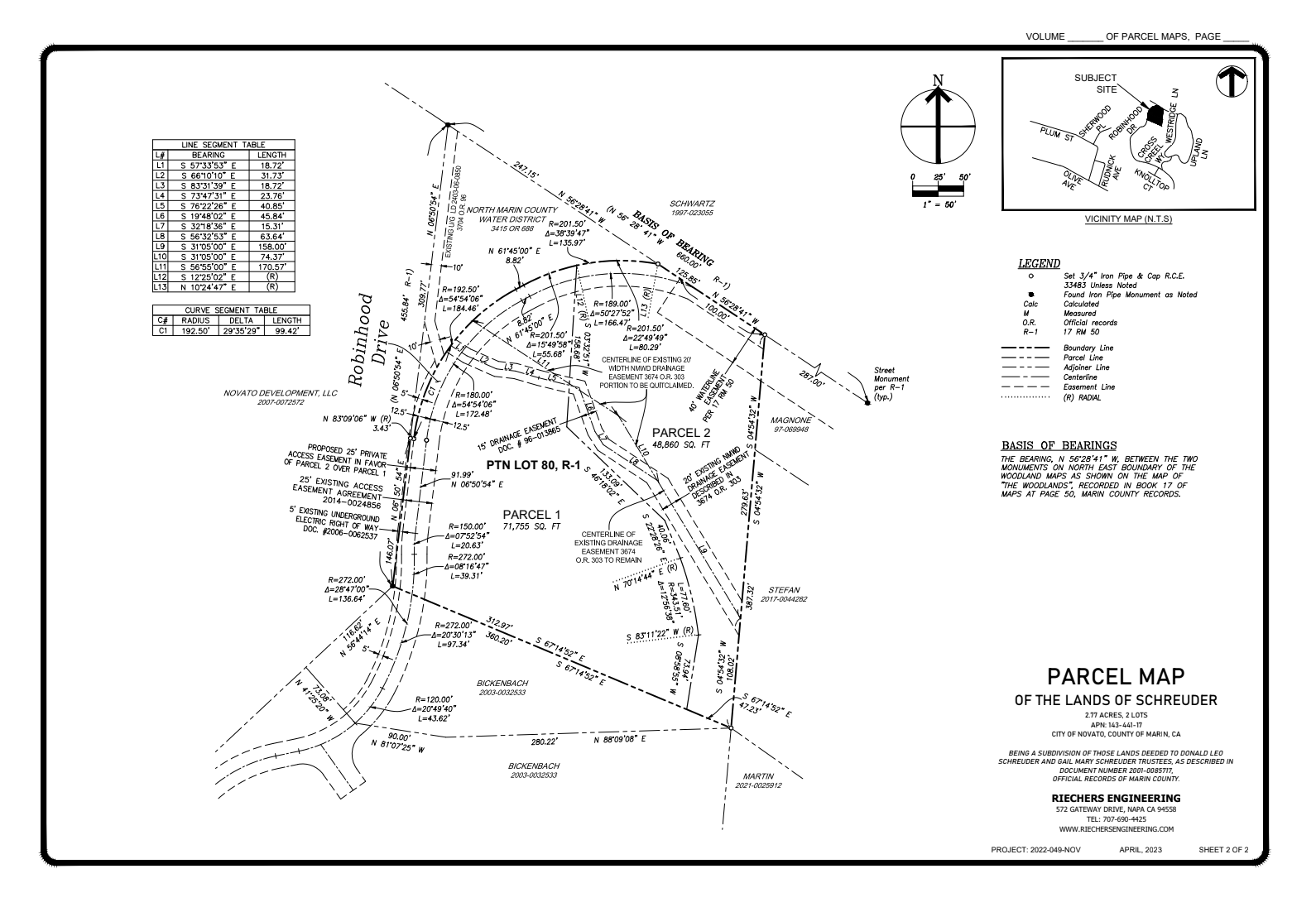
Napa and Bay Area$1,500,000
Project examples help homeowners understand what a practical SB9 outcome can look like.
Hear what our clients have to say
Trusted by California homeowners
“Riechers Engineering handled every step of the process for my SB9 lot split project.”

Francisco N.Napa
“Everyone was always available, responded quickly, and was very easy to communicate with.”

Yung C.Sherman Oaks
“Thank you for being such a wonderful partner throughout this process.”

Jinging C.Walnut Creek
Portraits are illustrative; testimonials are from Riechers clients.
California’s new SB9 law
Senate Bill 9 can create a second legal property.
SB9 is California’s lot split law for qualifying single-family residential properties. The opportunity is real, but the property still has to clear zoning, lot size, access, utility, title, environmental, and local objective-standard issues.
A California lot split path
For qualifying parcels, SB9 may allow one residential property to be split into two legal parcels.
Single-family residential owners
The best candidates have sufficient usable lot area, practical access and workable utilities.
Local constraints are nuanced
SB9 changes a lot about what a property can do—but not everything. A thorough eligibility assessment is essential. We’ll provide one to you for free.
California city feasibility
SB9 is statewide, but eligibility is property specific.
A statewide law does not create the same outcome on every parcel. Riechers evaluates the property, the city, the lot geometry, and the engineering constraints together before recommending a path.
Carbon offsetting
Riechers Engineering has planted over 500 trees with One Tree Planted.
We’ve planted over 500 trees so far.
Guarantee and risk control
Ensure a clear path forward before spending a dime
The lot split path starts with feasibility, risk control, and practical next steps before homeowners commit to expensive survey, mapping, or design work.
Clear expectations
Clarify cost expectations before the homeowner commits to expensive survey, mapping, or planning work.
Riechers handles the process
The client role is limited to signatures, notarization, lot line review, and payments.
Practical clarity
We’ll check the property carefully so that you don’t choose the wrong project path or spend money in the wrong order.
SB9 education hub
SB9 guides for the questions homeowners actually ask
Use these guides to understand the law, compare options, estimate risk, and decide whether your property is worth reviewing before you spend money on the wrong next step.
What is SB9?
The primary California SB9 lot split guide for homeowners.
SB9 vs ADU
Compare a separate-parcel strategy with an accessory dwelling unit.
SB9 lot split cost
Understand cost ranges, risk, and why feasibility comes first.
Step-by-step process
See what happens from feasibility through parcel-map recordation.
Property eligibility
Review the checks that determine whether the opportunity is real.
40 percent rule
Learn the lot-size math and the physical constraints behind it.
SB9 with a mortgage
Understand why lender, title, and sale strategy need review.
Neighbor approval
Clarify the difference between objective standards and neighbor preference.
Recent articles
Helpful SB9 articles for the next decision.
Recent SB9 articles help homeowners understand financing, ADUs, eligibility, and the decisions that come before a lot split.
Financing an SB9 Project: What Are Your Options?
Understand lender, mortgage, and financing questions before planning a split.
SB9 Lot Splits vs. Building an ADU
Compare a separate-parcel strategy with adding an ADU on the same property.
Is Your Property Eligible for an SB9 Lot Split?
Start with the rules, constraints, and feasibility questions that matter most.
Source-backed guidance
SB9 advice should come from experts who have a depth of knowledge in the matter.
Riechers keeps SB9 guidance tied to California housing rules, local objective standards, and the physical feasibility of the lot instead of giving homeowners a generic yes or no.
California HCD SB9 fact sheet
Use state guidance as the baseline for what SB9 can and cannot do before checking local and property-specific constraints.
Read HCD fact sheetCalifornia HCD lot split guidance
SB9 lot splits, two-unit development, objective standards, and feasibility questions still need careful review.
Read HCD guidanceCalifornia SB9 homeowner guide
This California SB9 homeowner guide explains the rules, risks, and next steps in plain language.
Read the SB9 guideThe eligibility review is not a legal opinion, loan approval, or city approval; it is the first practical screen before a homeowner spends heavily on the next phase.
FAQ
Common questions before the eligibility review
Can SB9 really create a separate legal parcel?
For qualifying California properties, SB9 may allow an urban lot split that creates two legal parcels. The real question is whether the property, title, access, utilities, and local objective standards make that split practical.
How do I know if my property qualifies for SB9?
Start with a property-specific eligibility review. Riechers checks lot size, zoning, access, utilities, existing structures, title issues, environmental constraints, lender concerns, and local objective standards.
Is SB9 better than building an ADU?
Not always. An ADU can be a simpler path for adding a unit on the same parcel. SB9 may be stronger when the goal is a separate legal parcel, resale flexibility, family planning, rental strategy, or long-term property value.
Can I do an SB9 lot split if I have a mortgage?
A mortgage does not automatically make SB9 impossible, but lender, title, collateral, refinance, and sale-strategy issues need review before a homeowner assumes the new parcel can be sold or financed separately.
Does SB9 require neighbor approval?
SB9 review is generally based on eligibility and objective standards, not a neighborhood vote. That does not mean there are no rules; the property still has to satisfy the applicable technical and local requirements.
How long does an SB9 lot split take?
Timing depends on the city, the parcel, agency comments, survey and engineering work, title conditions, and the owner’s strategy. A feasibility review helps identify the likely process before the project moves into heavier work.
What does the 40 percent rule mean?
The 40 percent rule is a lot-size screen for an SB9 urban lot split. It is important, but it is not the whole answer because access, utilities, shape, slope, easements, and local standards can still decide whether the split is practical.
What happens before paying for plans?
Start with an eligibility and feasibility review so the property is checked before money is spent on survey, engineering, architecture, or agency work in the wrong order.
Start your lot split today
Check whether your property may qualify before you spend money in the wrong order.
Start with the eligibility checker so the property can be reviewed before expensive work begins.
California SB9 city guides
Check local SB9 lot split rules by city and county.
California SB9 starts with statewide rules, but local zoning, access, utilities, coastal overlays, and city review standards can change whether a property is practical. Our local guide hub organizes the city and county pages in one place.