California small lot subdivision review
SB1123More Housing.More Options.More Value.
Effective July 1, 2025, SB1123 expands California's SB 684 / Starter Home Revitalization Act path for qualifying small lot subdivisions. Riechers Engineering helps owners compare SB1123, SB684, and SB9 before spending money on surveys, parcel maps, plans, or permit strategy.
What Is SB1123?
SB1123 updates California's SB 684 small lot subdivision law, also known as the Starter Home Revitalization Act or SHRA. For qualifying properties, it can create a ministerial approval path for projects with up to 10 parcels and 10 residential units, meaning the review is based on objective standards rather than a discretionary public hearing. The opportunity is powerful, but eligibility depends on zoning, parcel size, location, infrastructure, housing history, environmental constraints, and local implementation details.
Up to 10 Units
Potentially create up to 10 residential units on a qualifying property.
Urban Infill
Designed for qualifying city and urbanized-area parcels with infrastructure access.
More Flexibility
May create smaller fee-simple parcels than traditional subdivision rules allow.
More Value
SB1123 can open new options for housing, sale, long-term hold, or family planning.
SB1123 eligibility
Who Can Benefit From SB1123?
SB1123 is worth investigating when a property owner has a vacant, underused, or strategically located lot in an urbanized area and wants to know whether more housing, more parcels, or more ownership options are legally possible.
- Single-family-zoned parcels up to 1.5 acres with accessible open space
- Multifamily-zoned parcels up to 5 acres with accessible open space
- Certain mixed-use or commercial-zoned sites where residential mixed-use development is allowed
- Legal parcel in a qualifying city or urbanized county area
- Public water and municipal sewer feasibility
- No obvious protected housing, tenant-history, or environmental exclusion issues
- Enough usable site area for access, setbacks, utilities, and future homes
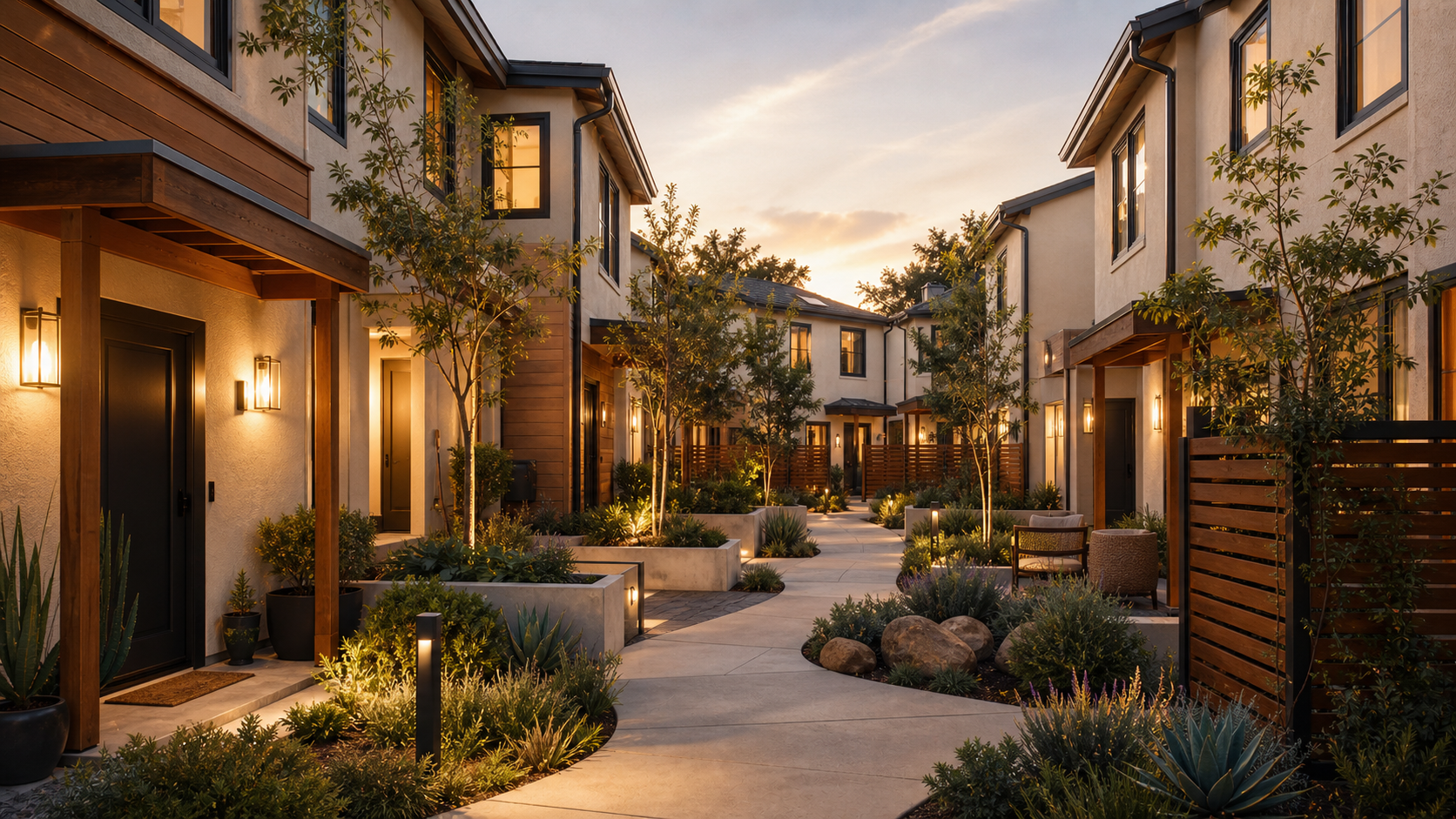 Illustrative development concept
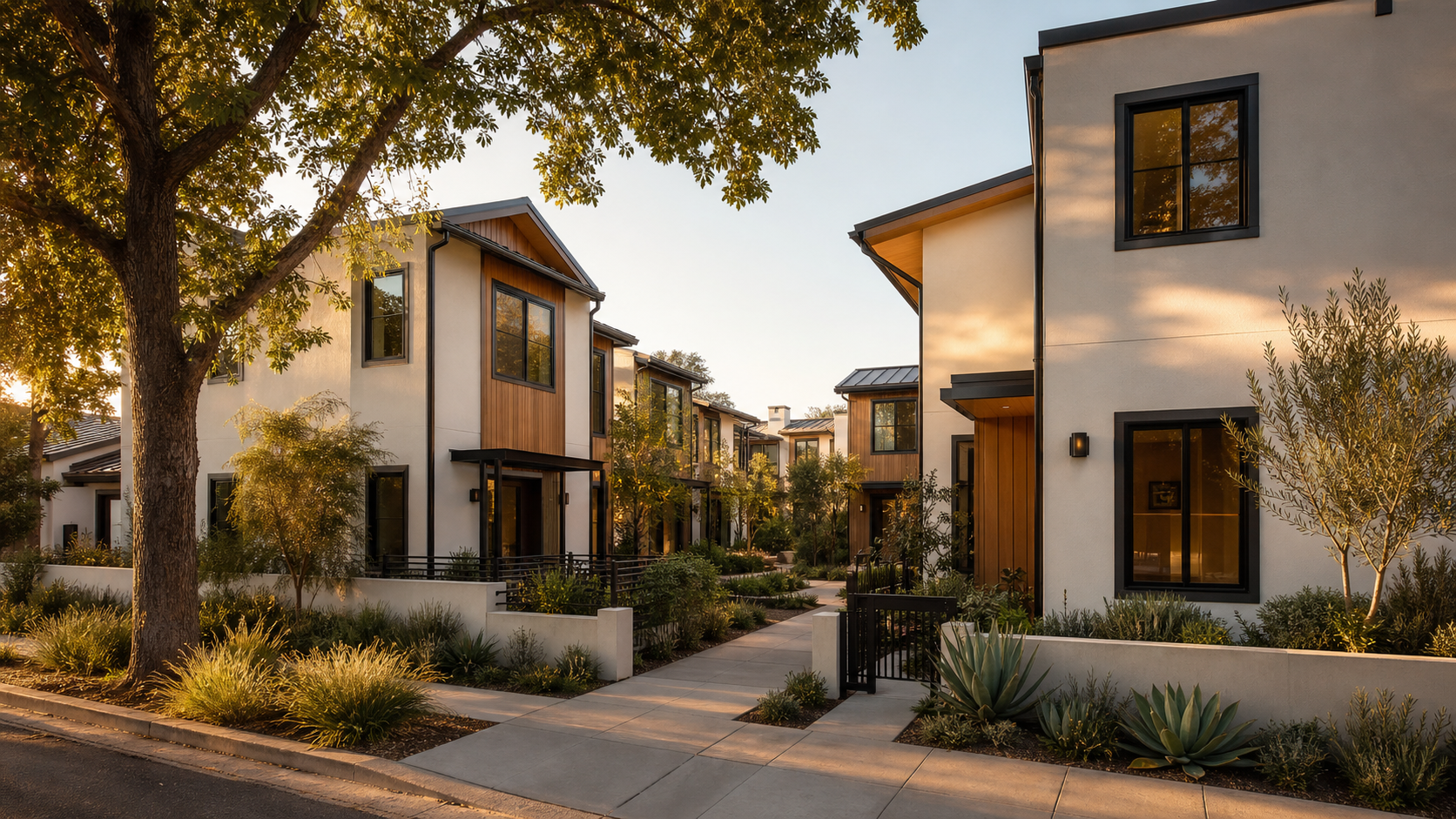
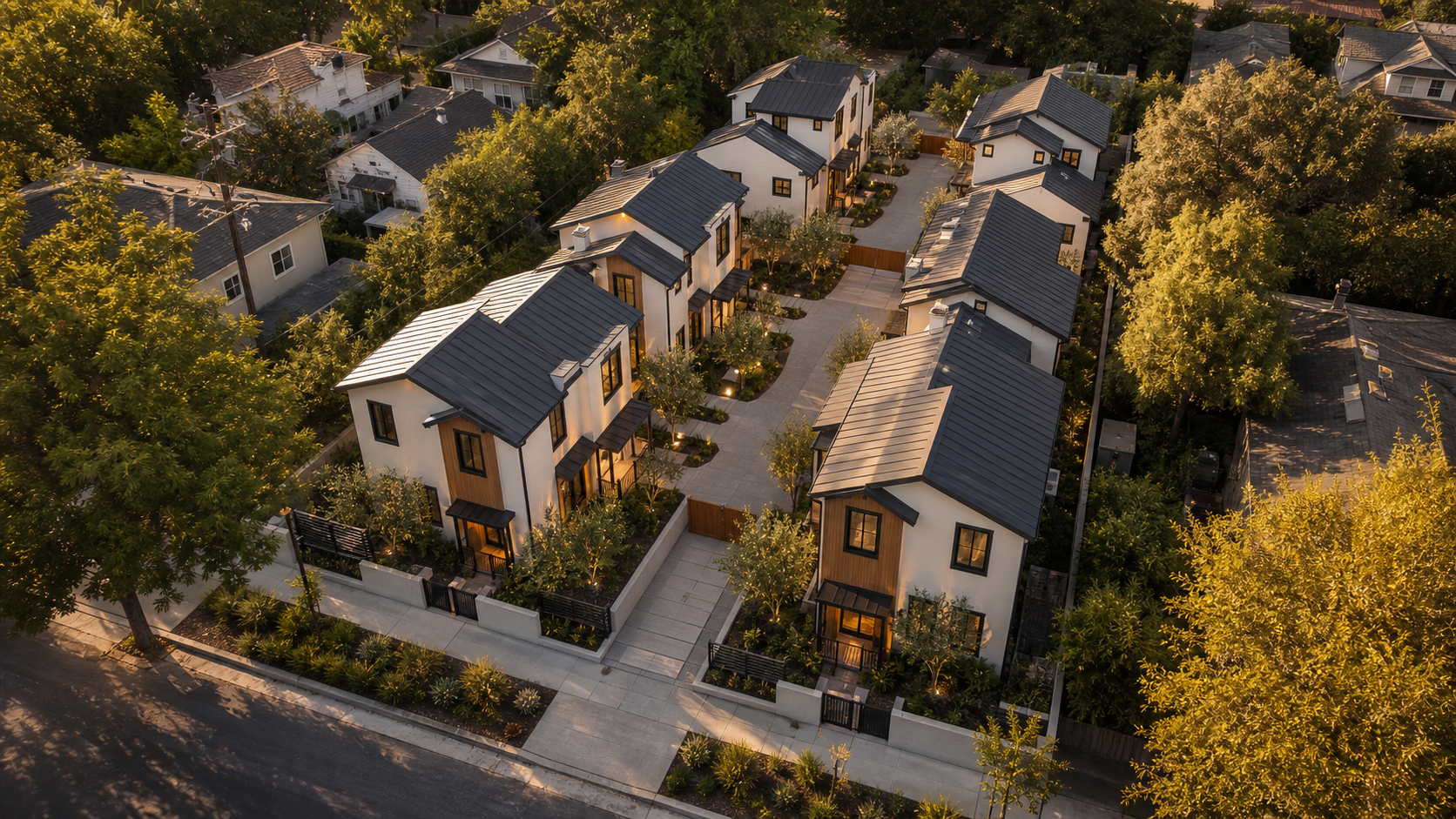
Concept imagery only. Actual SB1123 feasibility depends on the parcel, zoning, access, utilities, objective standards, exclusions, and local implementation.
Choose the right path
SB1123 vs SB684 vs SB9
The best route depends on the parcel. Riechers Engineering reviews the available state-law options together so an owner does not waste months pursuing the wrong entitlement strategy.
Our SB1123 Feasibility Process
We make it simple to understand your options and move forward with confidence.
Use Eligibility Checker
Start with the current Riechers eligibility checker for an initial property review.
Feasibility Analysis
We evaluate SB1123, SB684, SB9, zoning, and development potential.
Engineering & Planning
We create a practical path for parcel maps, units, and approvals, then provide white-glove support to complete the process from start to finish.
Design & Build
Move forward with permits, construction, and added property value.
Development possibilities
What SB1123 Could Make Possible
Riechers does not have published SB1123 case studies yet. These concept images show the kind of 3-to-10-unit infill housing patterns SB1123 may help owners evaluate.
8-Unit Courtyard
Small homes organized around shared open space, access, and utility planning.
Illustrative only
9-Unit Small-Lot Row
Fee-simple-style homes that may create more ownership or sale options.
Illustrative only
10-Unit Site Plan
Parcel-level planning for access, open space, utilities, setbacks, and buildability.
Parcel review requiredvalue created for clients
across feasibility, lot splits, and engineering plans
of engineering experience and local knowledge
of property owners helped across California
These are broad Riechers proof points, not SB1123-specific case-study claims.
SB1123 Questions Property Owners Ask
Is SB1123 the same as SB9?
No. SB9 is generally a two-parcel urban lot split path for eligible single-family properties. SB1123 updates SB 684 and can apply to qualifying small lot subdivision projects with up to 10 parcels and 10 units.
Does every vacant lot qualify for SB1123?
No. The parcel must satisfy zoning, size, urban-location, infrastructure, housing-history, and site-exclusion requirements. That is why a parcel-level feasibility review matters.
Can Riechers Engineering compare SB1123, SB684, and SB9?
Yes. A good review should compare the available state-law paths so the owner does not chase the wrong entitlement strategy.
What does ministerial review mean for SB1123?
Ministerial review means the agency checks the project against objective standards instead of making a discretionary judgment through a public hearing. The project still has to satisfy the applicable standards.
Can SB1123 create up to 10 separate parcels?
Potentially, yes, for qualifying projects. The exact layout depends on parcel size, zoning, access, infrastructure, objective development standards, and any site-specific exclusions.
Is SB1123 only for developers?
No. Property owners, families, investors, builders, and landowners may all benefit from a feasibility review if they want to understand whether a lot can support additional homes or fee-simple parcels.
When did SB1123 take effect?
SB1123 updates to California's small lot subdivision process became operative on July 1, 2025. Local implementation can still vary, so a property-specific review should check the state law, local objective standards, agency procedures, and current application requirements.
What do you need for an SB1123 feasibility review?
Start with the property address and your goal. From there, the review can look at assessor data, zoning, parcel size, utility feasibility, aerial context, prior maps, local standards, and the likely entitlement path.
Why hire an engineering team before submitting?
SB1123 eligibility is only the first question. Engineering feasibility, access, utilities, drainage, mapping, and local submittal requirements can determine whether the opportunity is practical, financeable, and worth pursuing.
Ready to unlock the potential of your property?
Let our engineering team help you navigate SB1123 and create more housing, more value, and more options.