New California law · Signed September 29, 2026

SB 1116 is signed. See if your California lot may qualify.

SB 1116 updates California’s Starter Home small-lot subdivision law (SB 684 / SB 1123) for applications filed on or after January 1, 2027. Find out free whether your property may qualify, and prepare for January 2027 filings.

New rules for applications received January 1, 2027 onward
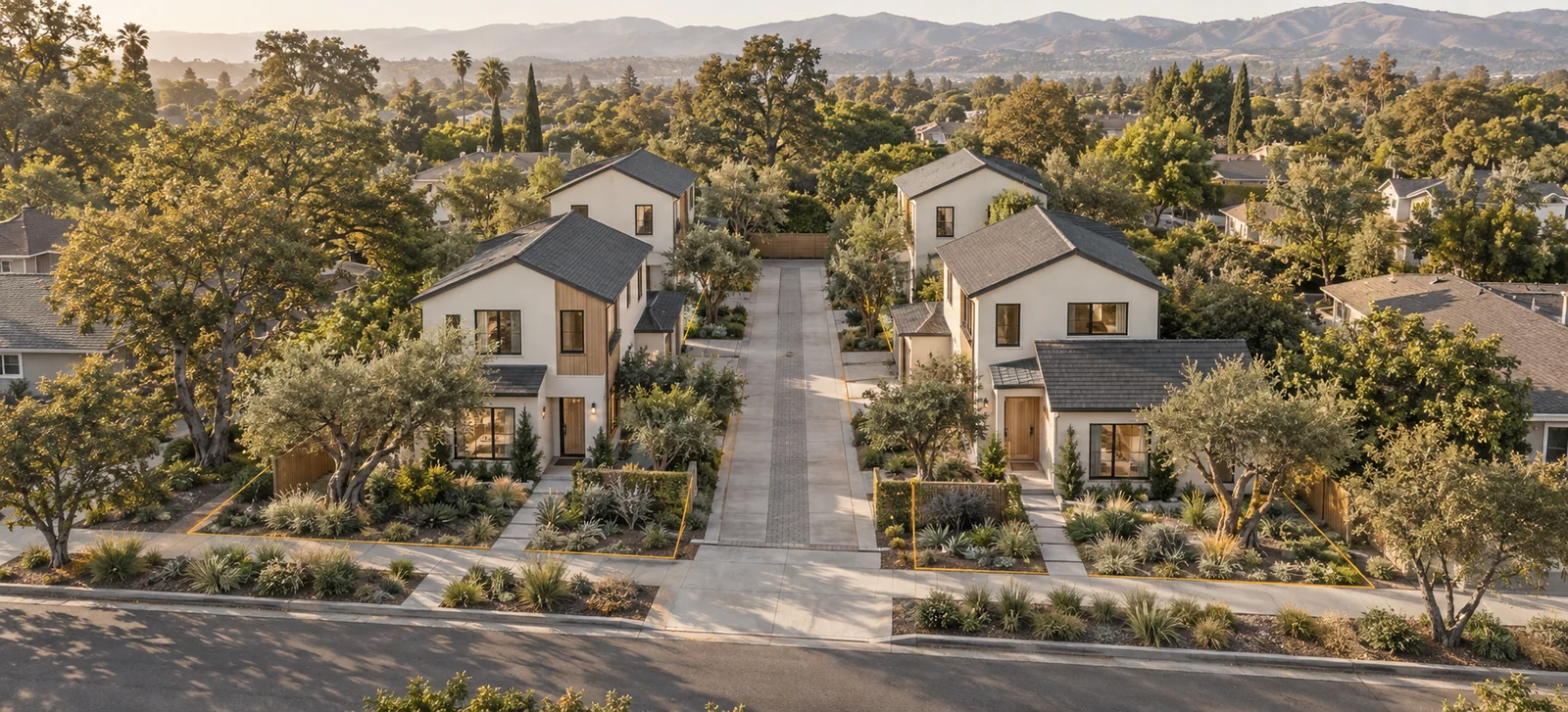
Architectural view of compact California homes along a landscaped shared lane.
Licensed civil engineers and land surveyors
Ministerial lot splits and subdivisions
40+ years helping California property owners

The 2027 update

What SB 1116 changes

SB 1116 keeps the Starter Home law in place and changes how it works for new applications. These are the four changes owners will notice most.

A new zoning test

Today’s 66% minimum-density test is dropped. Instead, the site’s base zoning must allow no more than 15 units, or no more than 26,250 square feet of residential floor area where there’s no unit cap. Some sites that don’t qualify today may qualify in 2027, and some that qualify today may not.

Smaller lots through averaging

Lots can go as small as 480 square feet on multifamily land or 960 square feet on single-family land, as long as the new lots average at least 600 or 1,200 square feet. When averaging is used, no new residential lot can be more than half the original parcel; a remainder parcel is excepted.

Build-friendly standards

On vacant single-family lots, height limits are measured in feet, not number of floors. Front setbacks from the original lot line are capped at 10 feet, there are no setbacks between the new lots (building code aside), and a city can’t set the floor area ratio below 1.25.

CC&Rs can’t block a qualifying project

Private covenants and deed restrictions that prohibit or physically preclude a qualifying project become unenforceable. This doesn’t apply to HOA communities (common interest developments).

Applies to applications received on or after January 1, 2027. Applications filed in 2026 stay under current rules.

The foundations remain

What stays the same

The core of the Starter Home law carries over into 2027.

Up to 10 lots and 10 homes

A qualifying parcel can be split into up to 10 lots with up to 10 homes. An existing house can stay on a qualifying separate remainder parcel, which doesn’t count toward the 10.

Lot size and density limits

Lot size and density limits still apply. SB 1116 changes how they’re calculated.

Public water and sewer

New lots must be served by a public water system and a municipal sewer system. Septic doesn’t qualify.

A 60-day response deadline

The city or county has 60 days to act on a complete application, with no discretionary hearing. SB 1116 adds the same deadline for final maps for applications received on or after January 1, 2027.

Parcel map or subdivision map

Four or fewer new lots

Usually a Tentative Parcel Map (TPM).

Five to ten new lots

Usually a Tentative Subdivision Map (TSM, also called a tentative tract map), followed by a separate final-map step. Street and utility improvements usually must be built or bonded before the map records.

An existing house can often stay on its own remainder parcel. State law doesn’t count that parcel toward the four if it keeps the existing uses, has no new homes and is not exclusively dedicated to serving the housing development project. Either way, Starter Home maps are reviewed by staff without a public hearing. Fees, studies and improvements are set locally and vary by city and county, and the property has to qualify first. Send us your address and we’ll check which path fits.

Site exclusions and protected housing
  • Very high fire hazard severity zones
  • High fire hazard zones in state responsibility areas
  • FEMA 100-year flood zones, unless federal flood criteria are met
  • Regulatory floodways, without a no-rise certification
  • Prime farmland or farmland of statewide importance
  • Voter-protected agricultural land
  • Federally defined wetlands
  • Listed hazardous waste sites not yet cleared
  • Earthquake fault zones, unless seismic code is met
  • Protected-species habitat
  • Land set aside in an adopted conservation plan
  • Land under a conservation easement

A project also can’t demolish or alter rent-restricted, rent-controlled or recently tenant-occupied housing.

Start with your property

Who may qualify

Every property is different, but these are the owners we most want to hear from.

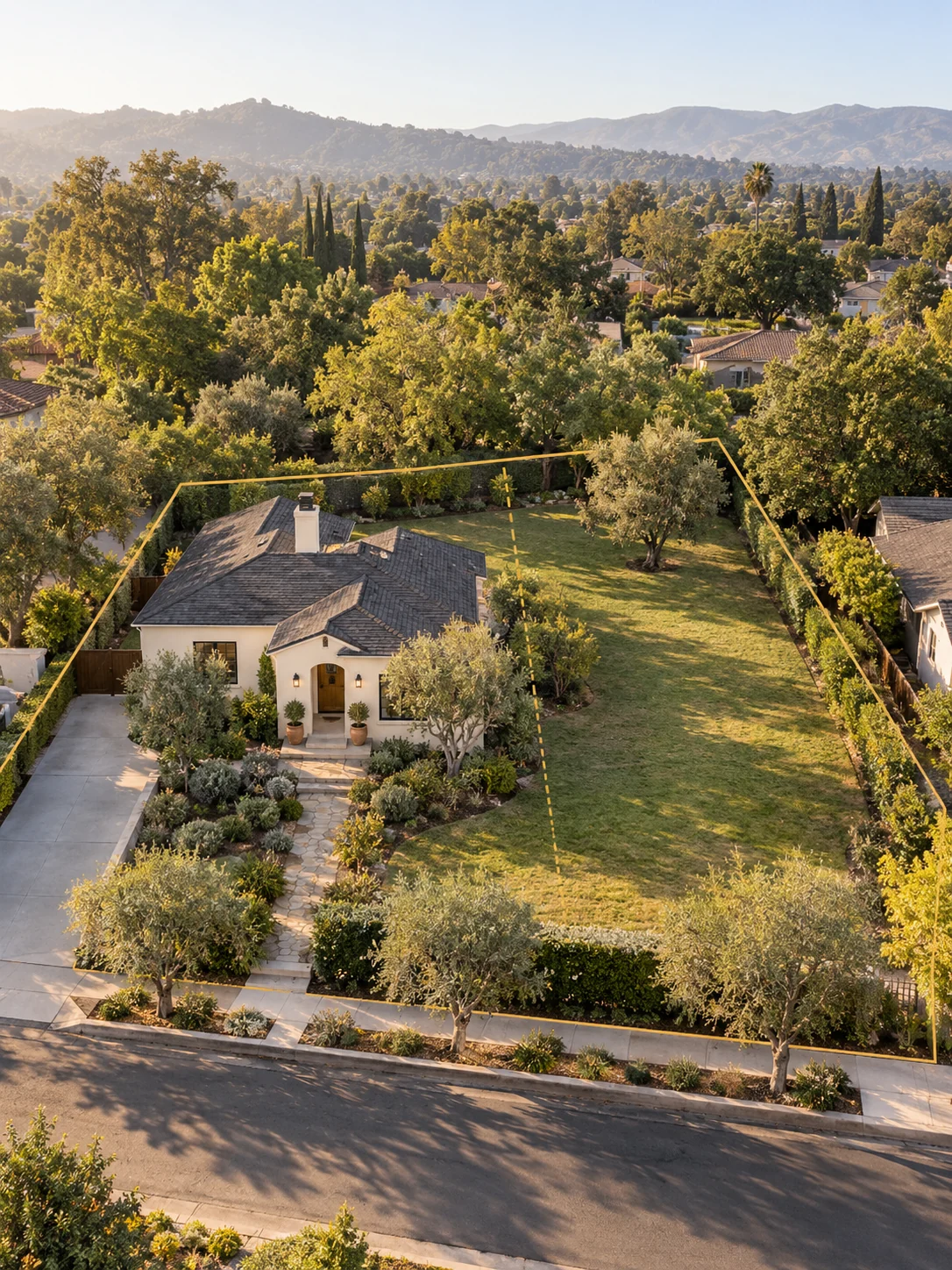
California home and open side yard outlined with a potential parcel division.
  • Lots in zones that allow multifamily housingIncluding commercial and mixed-use zones that permit or conditionally permit it, where the base zoning allows 15 units or fewer.
  • Single-family lots, including lots with a houseThe house can stay on a remainder parcel if the area being subdivided is vacant. The lot must be in a city or urbanized area, on public water and sewer.
  • Owners who looked at SB 1123 beforeIf the 66% density requirement or the urban-surroundings test stopped your project, it may be worth another look. For applications received on or after January 1, 2027, the density floor goes away and the urban test adds more ways to qualify, such as a site previously developed with an urban use. The property still has to be in a qualifying urban area.
  • Owners whose CC&Rs blocked a projectOutside of an HOA community.
  • Owners who hit a wall with SB 9The Starter Home path has no owner-occupancy affidavit, no 40% lot-split rule, and allows up to 10 lots instead of two, if the parcel passes the Starter Home tests.

A lot created by an SB 9 split or an earlier Starter Home map can’t be the starting parcel for a new Starter Home subdivision. Local inclusionary housing rules still apply, and some sites must include affordable units. Our free check covers all of it.

Additional restrictions apply in Altadena ZIP codes 91001 and 91003; we review any applicable exception.

A different path to consider

Hit a wall with SB 9?
SB 1116 expands a different path.

If SB 9 didn’t work for your property, you may be able to switch paths. SB 1116 updates the Starter Home pathway rather than SB 9. It is a separate path, expanded for 2027.

No owner-occupancy affidavit

SB 9 asks you to sign an affidavit promising to live on the property for three years. The Starter Home path doesn’t.

No 40% lot-split rule

SB 9 requires each new lot to be at least 40% of the original. Starter Home lots follow their own minimum sizes instead.

Up to 10 lots instead of two

SB 9 stops at two lots. The Starter Home path allows up to 10 lots and 10 homes on a qualifying parcel.

Your parcel still has to pass the Starter Home tests. It must be in a zone that allows multifamily housing (including commercial and mixed-use zones) or be a single-family lot of 1.5 acres or less; an existing house can stay on a remainder parcel if the area being subdivided is vacant. It must sit in an urban area, have public water and sewer, and be outside very high fire hazard zones and high fire hazard zones in state responsibility areas. For 2027 applications, the base zoning can allow no more than 15 units, or no more than 26,250 square feet of residential floor area where there’s no unit cap. A lot already created by an SB 9 split can’t be the starting parcel.

SB 9 and the Starter Home path, side by side

SB 1116 updates the Starter Home pathway rather than SB 9.

At a glanceSB 9 lot splitStarter Home law today2026 filingsStarter Home law with SB 11162027 filings
Live on the property?Owner must sign an affidavit to live there for three yearsNo owner-occupancy requirementNo owner-occupancy requirement
How many lotsTwoUp to 10 lots and 10 homesUp to 10 lots and 10 homes
Map typeParcel mapUp to four new lots: usually a Tentative Parcel Map. Five or more: usually a Tentative Subdivision Map, then a final mapSame. SB 1116 doesn’t change the map type
Lot size ruleEach new lot at least 40% of the original (60/40 split)At least 600 sq ft (multifamily) or 1,200 sq ft (single-family)Same minimums, or 480 / 960 sq ft with averaging; with averaging, no new residential lot over 50% of the original
Zoning or density testSingle-family residential zonesProject must reach at least 66% of the allowed density (housing element sites: the projected unit count)Base zoning allows 15 or fewer units, or up to 26,250 sq ft of residential floor area where there’s no unit cap

Swipe across to compare all three paths →

Why Riechers

Your surveyor and your engineer. One team.

A lot split lives or dies on the survey, the engineering and the map, whether that’s a Tentative Parcel Map or a Tentative Subdivision Map. At Riechers, the people doing that work sit on the same team, so nothing gets lost between offices.

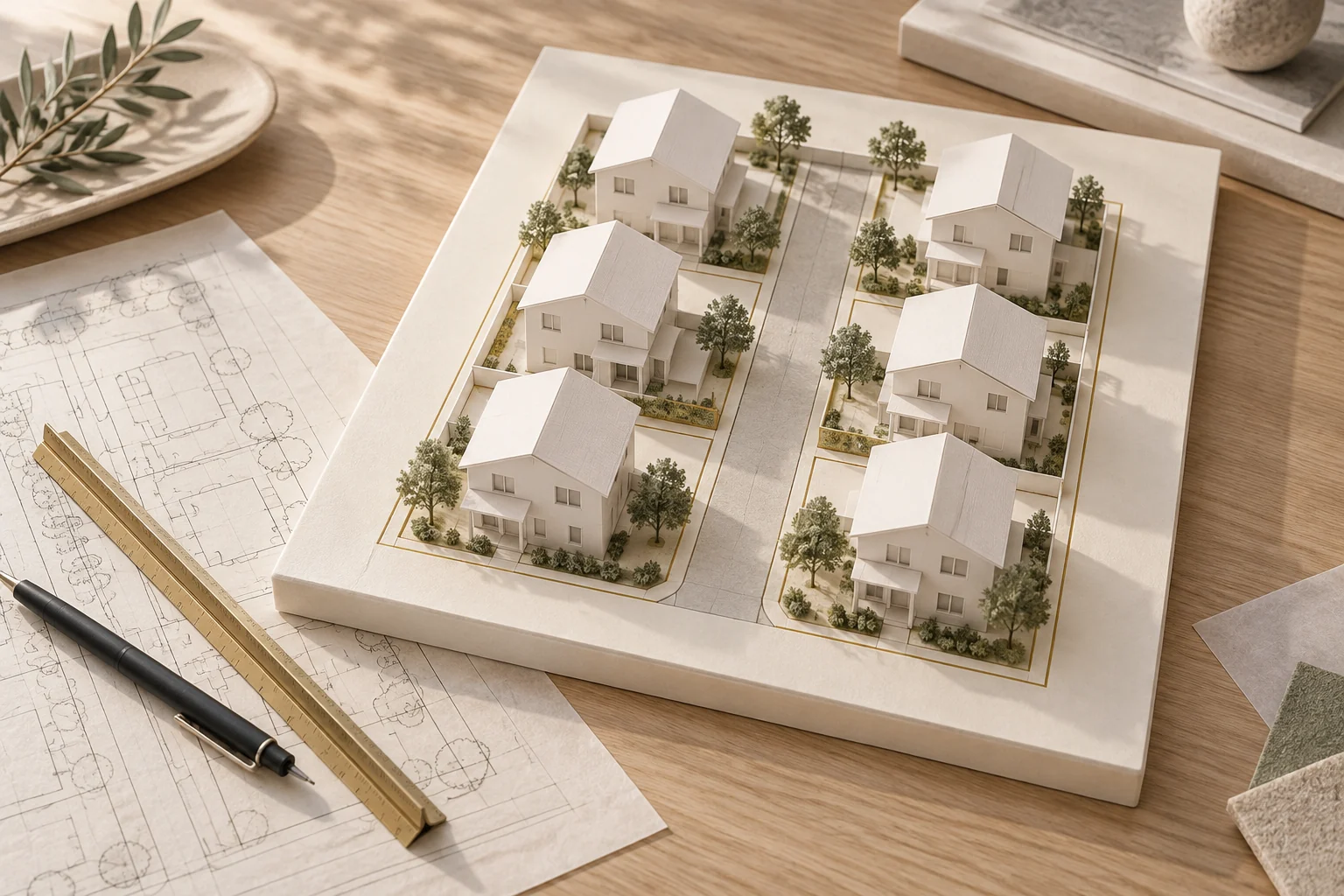
Six-home scale model with parcel linework and drafting tools.

Licensed engineers and surveyors in-house

Our team includes licensed civil engineers and land surveyors.

Lot splits are our specialty

We focus on ministerial lot splits and subdivisions in California. It’s what we do every day, not a side service.

Over 40 years of experience

We’ve been helping California property owners create value for over 40 years.

Preparing for January

We’re reviewing properties now and helping owners prepare for January 2027 filings under the new rules.

From address to action

How it works

  1. Free eligibility check

    Send us your address. Our engineers review your parcel against the Starter Home rules and tell you where it stands. No cost, no obligation.

  2. A clear plan

    We walk you through your options on a call and recommend the right next step for your property.

  3. Feasibility report

    A paid, in-depth study of your parcel under the new rules, with a draft lot layout. The report shows how many lots the site can support and whether your project needs a Tentative Parcel Map (up to four new lots) or a Tentative Subdivision Map (five or more).

  4. Project kickoff

    After you sign, you meet your project manager and engineer to review site constraints and timeline. Your project manager is your main contact.

Engineering review

Start with an expert feasibility report

If your property qualifies, our engineers map out how the new rules apply to your parcel: a preliminary lot layout, access, water, sewer, drainage and off-site improvements. You’ll know what’s realistic before you commit to survey and engineering. We’ve been preparing these reports for SB 1123 projects and now do the same for SB 1116.

Paid service. We’ll confirm scope and fee first. Both depend on how many lots you create and which map that takes.

Clear answers

SB 1116 questions

Understand the new rules, then find out how they apply to your property.

When was SB 1116 signed and when does it apply?

The Governor's office announced on September 29, 2026 that Governor Newsom signed SB 1116 (Caballero). Its changes to the small-lot subdivision law apply only to applications a city or county receives on or after January 1, 2027.

Does SB 1116 replace SB 684 and SB 1123?

No. SB 1116 amends the same law, Government Code sections 66499.41 and 65852.28, which SB 684 created and SB 1123 updated (often called the Starter Home Revitalization Act). The program continues with new rules for 2027 filings.

How many parcels and homes can I create under SB 1116?

Still up to 10 parcels and 10 residential units on a qualifying lot. A remainder parcel that keeps existing uses, has no new units and is not exclusively dedicated to serving the housing development project is not counted against the 10.

Which map does my project need: a parcel map or a subdivision map?

It depends on how many new lots you create, and SB 1116 doesn't change that. Under California's Subdivision Map Act, up to 4 new lots usually uses a Tentative Parcel Map (TPM). 5 or more new lots usually uses a Tentative Subdivision Map (TSM, also called a tentative tract map), which adds a separate final-map step, typically calls for a soils report, and usually requires street and utility improvements to be built or bonded before the map records. With 4 or fewer, many improvements can wait until building permits. A designated remainder parcel that keeps existing uses, has no new units and is not exclusively dedicated to serving the housing development project isn't counted toward the 4 (Government Code section 66424.6(a)(1)). Both map types are reviewed by staff with no public hearing, and normal local map fees apply.

Is the 1.5-acre limit for vacant single-family lots changed?

No. The 1.5-acre limit for vacant single-family lots stays. A lot with a house on it can still qualify: the house can stay on a remainder parcel as long as the area being subdivided is vacant, as HCD explained in its October 7, 2025 letter to the City of San Diego.

What density or zoning test applies under SB 1116?

SB 1116 removes the prior minimum-density requirement (66% of allowed density) and replaces it with a zoning test: the site's base zoning must not allow more than 15 units, or more than 26,250 square feet of residential floor area where no unit cap exists. Housing element sites for lower-income units still require a proportional share of affordable units.

How small can the new lots be?

Generally at least 600 square feet on multifamily-zoned land and 1,200 square feet on single-family-zoned land. With lot-size averaging, individual lots can be as small as 480 or 960 square feet if the average stays at 600 or 1,200 square feet, and when averaging is used, no new residential lot may exceed 50% of the original parcel.

Is there a deadline for the city or county to respond?

A qualifying map is reviewed ministerially, without a discretionary hearing. The city or county has 30 days to tell you in writing whether the application is complete, and 60 days from receiving a complete application for a Tentative Parcel Map or Tentative Subdivision Map to act on it. For applications received on or after January 1, 2027, SB 1116 adds the same 60-day deadline for final maps. If the agency does not act in time, the application is deemed approved. The agency can still deny a map that doesn't meet the law's objective requirements, or by making a written finding of a specific, adverse impact on public health or safety that can't feasibly be mitigated.

Can CC&Rs or deed restrictions block an SB 1116 project?

Starting January 1, 2027, new Civil Code section 714.9 makes covenants or restrictions unenforceable if they prohibit or physically preclude a qualifying project. It does not apply to common interest developments such as HOA communities.

If I file in 2026, do the SB 1116 rules apply?

The SB 1116 amendments apply only to applications received on or after January 1, 2027. Riechers can review your property now and help you prepare for January 2027 filings.

Do I have to live on the property?

No. The Starter Home law (Government Code section 66499.41) has no owner-occupancy or residency requirement, and SB 1116 doesn't add one. Owner-occupancy affidavits apply to SB 9 lot splits, which SB 1116 does not change. Other rules can still apply: some sites must include affordable units with long-term income restrictions, local inclusionary and rental rules still apply, and a property that had tenants in the last five years may not qualify.

Your next step is free

Find out if your property may qualify under SB 1116

Tell us about your property and our engineers will get back to you with your results. If it qualifies, we’ll help you prepare for January 2027 filings. It’s free, and there’s no obligation.

Prefer to talk it through?
Call 707-875-6869

We’ll check the right timing for your property. If your property qualifies under today’s SB 1123 rules and does better under them, or wouldn’t pass the new ones, we may recommend an SB 1123 application that is deemed complete by December 30, 2026, to lock in the current rules. We’ll tell you in your free check.

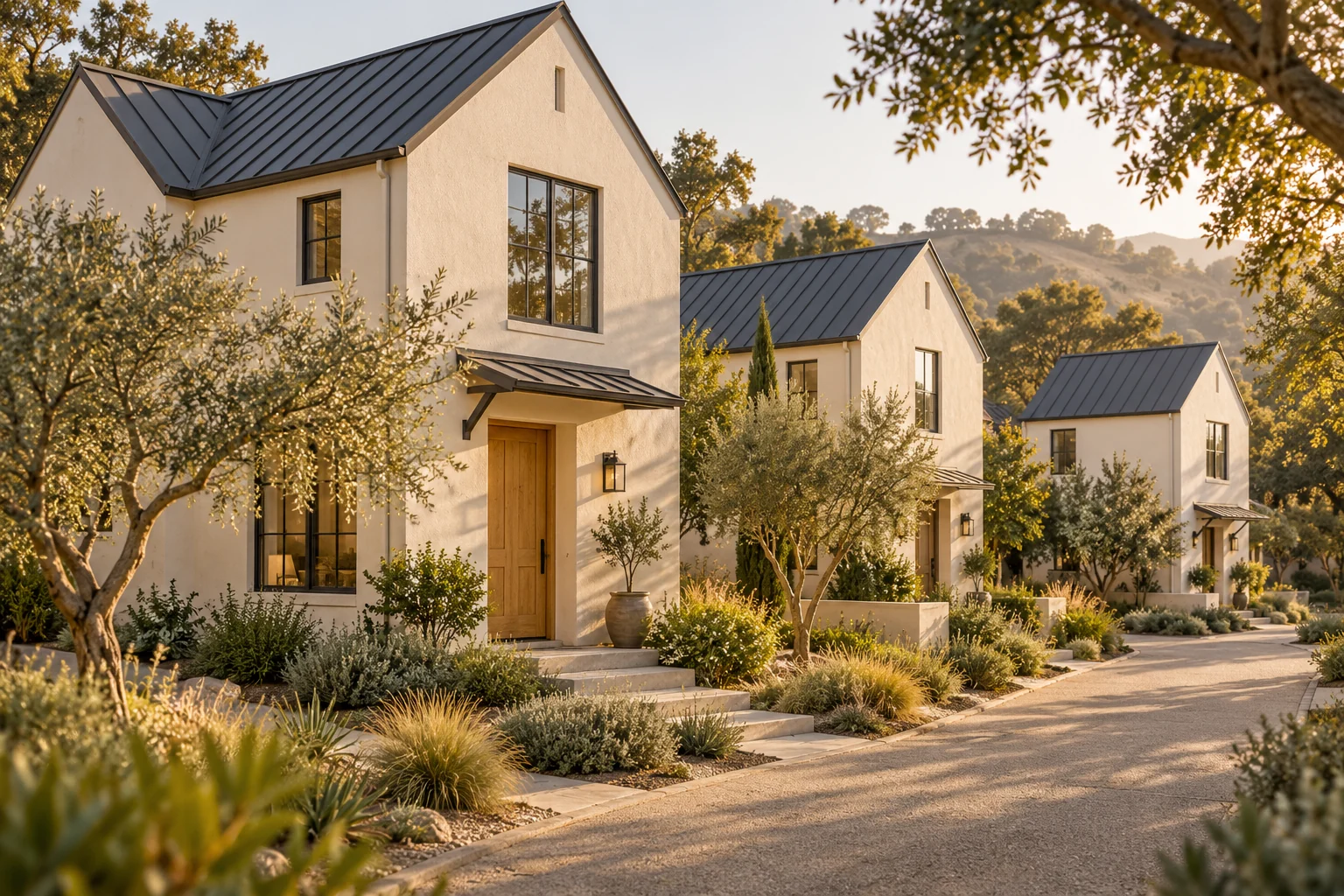
Cream stucco homes with wood entry doors and landscaped front gardens.

Privacy Policy and Terms of Service

Request your report

Tell us about your property. We’ll confirm the scope and fee before starting your feasibility report.

Privacy Policy and Terms of Service

Scroll to Top